
Weeks 1–2
Pain
Calm the pain down.
Hands-on work settles the irritated tissue while we adjust your training load so the run stops feeding the problem, starting your very first visit.
What We Treat
The twinge at mile three you keep negotiating with. The races you’ve quietly stopped signing up for. It’s fixable, and it starts with a cause-first evaluation, not a guess.
Sound Familiar?
Two or more? Keep reading.
Why It Happens
Running injuries almost never come from one bad run. It’s usually some mix of four culprits: load that climbed faster than your tissue could adapt, whether that was mileage, pace or hills. A stiff ankle or hip that quietly changed how you land. Strength that never caught up to the miles you’re asking your legs to absorb. And what your mechanics do late in a run, when you’re tired and the form you started with is gone.
The spot that hurts is often just the spot that gave in first. A calf can pay for a hip. A knee can pay for an ankle. That’s why a cause-first evaluation matters, and why rest, a foam roller, or another pair of shoes so often falls short. They treat the symptom, not the source. We look at strength, joint motion and your actual gait, then fix what is driving it.
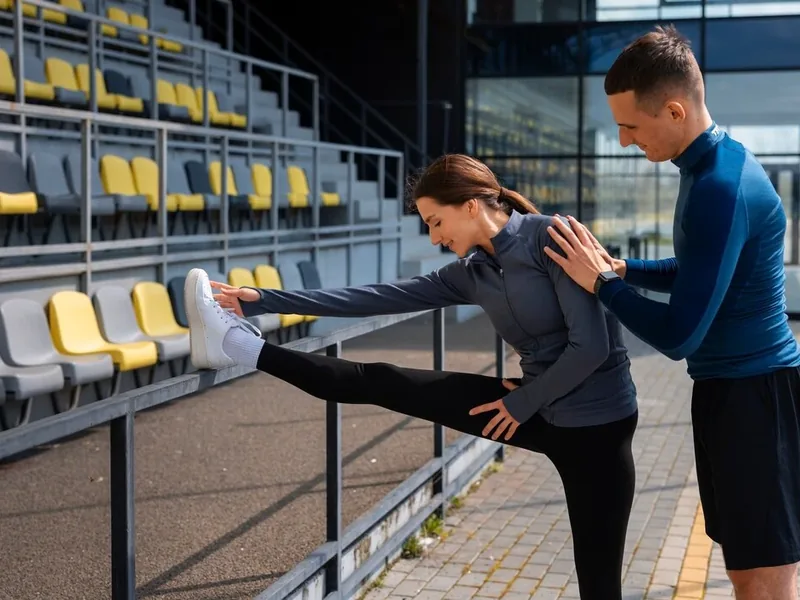
The Honest Truth
You are the one who never misses the long run, who shows up for the group at 6am in February. Which is exactly why you keep running on a problem instead of fixing it. Nobody regrets starting too early.
How We Fix It
Every plan has an endpoint. Here’s what the four phases look like when the goal is getting back on the road.
Weeks 1–2
Pain
Hands-on work settles the irritated tissue while we adjust your training load so the run stops feeding the problem, starting your very first visit.
Weeks 2–6
Prime
Targeted mobility work restores the hip and ankle motion your stride has been quietly working around.
Weeks 6–10
Perform
Progressive strength and single-leg loading build the tolerance your mileage has been asking for and not getting.
Weeks 10+
Prevent
Video gait analysis and a graded return-to-run progression test the leg at real pace and real distance before you’re cleared to go all-in: that’s the endpoint, not just another appointment.
This team is fantastic. I could barely walk with lower back pain. Dan put together a realistic, personalized plan for me. 6 weeks later I was running 6 miles and getting through my whole day pain free. Thanks team, you’ll be my first call the next time something breaks!
Shared by Ira A. · Running rehab
Could barely walk with lower back pain
Running 6 miles and getting through the whole day pain free
Questions, Answered
Usually not completely, and it’s one of the first things we sort out. Stopping cold tends to leave you unfit and just as vulnerable when you start again, so the goal is to find the dose your leg can handle right now and build from there. That might mean shorter, flatter or slower for a while. If the tissue genuinely needs time off the road, we’ll tell you straight, and we’ll keep training everything else while it heals.
Sometimes they help, but they’re rarely the whole story. Footwear changes how load reaches your leg. It doesn’t build the strength or restore the motion your leg was missing. If a stiff ankle or a weak hip is the reason your stride looks the way it does, a new shoe just moves the problem somewhere else. We look at the whole chain first, then decide whether footwear needs to change at all.
You get a cause-first evaluation with a Doctor of Physical Therapy, one on one. We test strength and joint motion, look at how you actually run using video gait analysis, and connect what we see to where and when the pain shows up. You leave knowing what is driving it and what the plan is, through all four phases: Pain, Prime, Perform, and Prevent.
Book Your Visit
Request a time and a real person calls you back. No phone tree. No ‘someone will reach out.’ Just a plan.
5.0 · 120+ Google reviews
Typical response: under 2 business hours
Step 1 of 5
That’s the hard part done. We’ll call during business hours to lock in your time.
Visit Us