
Weeks 1–2
Pain
Get the swelling down.
Swelling control, hands-on work and gentle early motion inside your surgeon’s limits, so the joint stops fighting you.
What We Treat
A new hip or knee is only half the job. The other half is the range you win back and the strength you rebuild around it. That starts with a cause-first evaluation, not a photocopied handout.
Sound Familiar?
Two or more? There’s more available than you were told. Keep reading.
Why It Happens
A replacement fixes the joint. It does not fix what the years leading up to it did to everything around it. You limped long before the surgery, so the quad and the glute on that side had already given up ground. Surgery adds swelling, and swelling switches muscle off. Scar tissue settles into whatever range you spend the most time in, which means the motion you skip early is the motion you fight for later. Meanwhile the good leg and your low back have been covering, and they are tired of it.
That is the real work after a replacement, and it is not something a handout can supervise. You are the one who kept going on a bad joint for years, because other people needed you upright and moving. That patience is exactly why the leg is this far behind now. A cause-first evaluation measures where your range, your strength and your swelling actually are, then builds the plan around the limits your surgeon set, one-on-one with a Doctor of Physical Therapy, every visit.
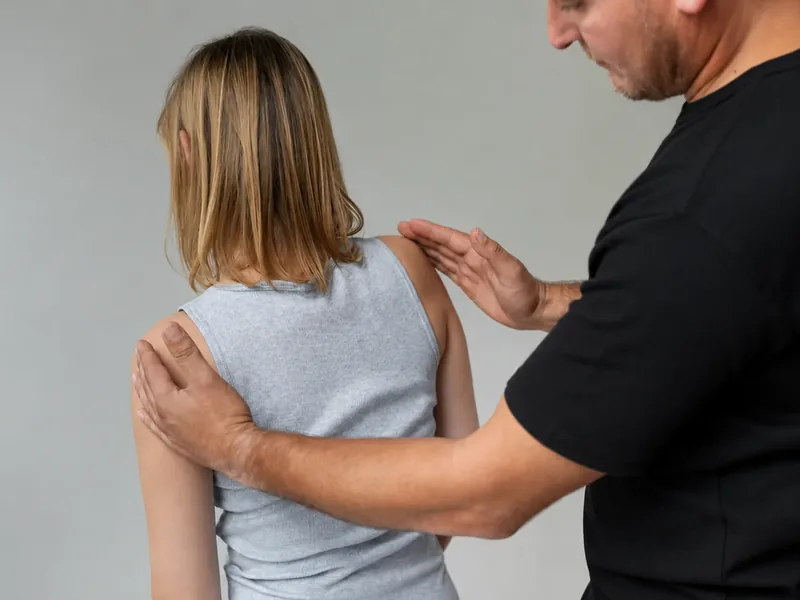
The Honest Truth
A replacement is a big thing to go through. It deserves a rehab plan that actually finishes the job.
How We Fix It
Every plan has an endpoint. Here’s what the four phases look like after a hip or knee replacement.
Weeks 1–2
Pain
Swelling control, hands-on work and gentle early motion inside your surgeon’s limits, so the joint stops fighting you.
Weeks 2–6
Prime
Targeted mobility and soft tissue work go after full straightening and full bend while the tissue is still willing to give them up.
Weeks 6–10
Perform
Progressive strengthening for the quad, glute and calf, with blood flow restriction available when the joint can’t take heavy weight yet.
Weeks 10+
Prevent
Stairs, uneven ground, walking distance and whatever you want back get tested under real load before you’re finished: that’s the endpoint, not just another appointment.
Elevate is outstanding and I cannot say enough good things about Sean. Full knee replacement and he had me back to tennis in 9 weeks (surgeon told me 12). The one on one attention is a must!
Shared by David N. · Knee replacement rehab
At the start: a full knee replacement
By the end: back on the tennis court, in his own words
Questions, Answered
If your date is not tomorrow, yes. Going into a replacement with more range and more strength in the leg leaves less to rebuild on the other side, and you will already know your exercises and your therapist. It is called pre-hab, and it is the most skipped step in the whole process. If surgery is close, tell us and we will build around the time you actually have.
No. It is common to finish a protocol, get discharged, and still be short on range, strength or confidence on a curb. A fresh cause-first evaluation measures where you actually are instead of where a calendar says you should be. If there is more available in that joint, we will find it and tell you honestly what it will take to get it.
Illinois has direct access, so you do not need a physician referral to start. Your surgeon sets the limits and we work inside them, then we do the part a protocol cannot do on paper: watch how you actually move and adjust to it. You are one-on-one with a Doctor of Physical Therapy every visit, at 7607 North Ave in River Forest.
Book Your Visit
Request a time and a real person calls you back. No phone tree. No ‘someone will reach out.’ Just a plan.
5.0 · 120+ Google reviews
Typical response: under 2 business hours
Step 1 of 5
That’s the hard part done. We’ll call during business hours to lock in your time.
Visit Us