
Weeks 1–2
Pain
Calm the pain down.
Hands-on work settles the irritated tendon and takes the edge off the joint, starting your very first visit.
What We Treat
The pinch in the front of the hip when you climb out of the car. The ache on the side that wakes you when you roll onto it. It’s fixable, and it starts with a cause-first evaluation, not a guess.
Sound Familiar?
Two or more? Keep reading.
Why It Happens
Hips don’t ache for no reason. And it’s almost never just one thing. It’s usually some mix of four culprits: irritated tendons and bursa on the outside of the hip. A joint that pinches at the front when you bend or rotate into it. Glutes and deep rotators that quietly weakened, so the joint stopped moving the way it was built to. And whatever your back, knee, and foot are handing to that hip every step you take.
None of that shows up on a quick glance. It takes a real, cause-first evaluation to sort out which one is driving your pain, and whether the hip is the cause or just where the complaint lands. That’s why rest, a foam roller, or a generic stretching sheet so often falls short: they answer the symptom, not the source. You’re the one who keeps everybody else moving, the school run, the groceries, the dog. Which is exactly why nobody has looked at your hip yet, and exactly why one honest evaluation changes the whole picture.
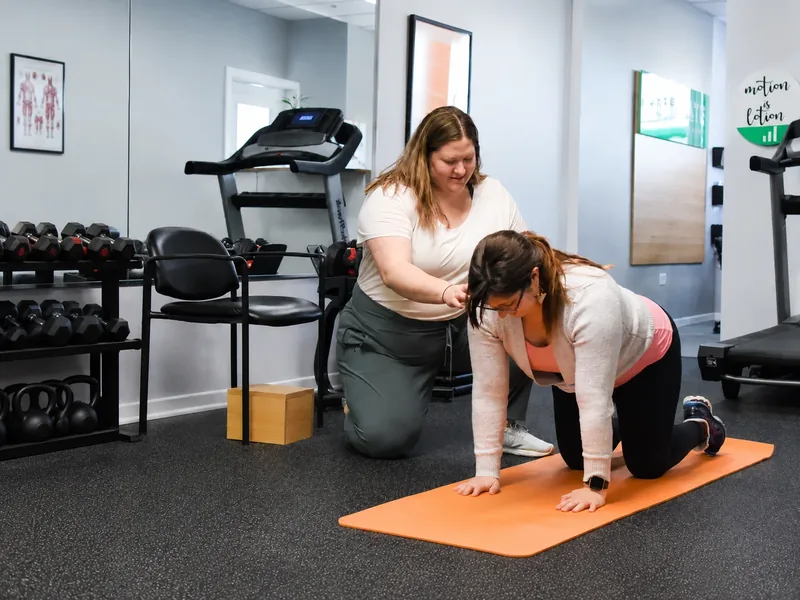
The Honest Truth
Nobody regrets starting early. The waiting is the part that costs you.
How We Fix It
Every plan has an endpoint. Here’s what the four phases look like for a hip.
Weeks 1–2
Pain
Hands-on work settles the irritated tendon and takes the edge off the joint, starting your very first visit.
Weeks 2–6
Prime
Targeted mobility work gives back the rotation and extension the hip has been quietly guarding.
Weeks 6–10
Perform
Progressive glute, deep rotator, and trunk strengthening builds the control the joint was missing in the first place.
Weeks 10+
Prevent
Stairs, hills, and single-leg loading get tested for real before you’re cleared to go all-in: that’s the endpoint, not just another appointment.
Sean was a great help during my recovery from a total hip replacement. He identified specific needs and goals for me that drove his recommendations for stretching and strengthening exercises. Just a few appointments really advanced my recovery.
Shared by Joe J. · Hip replacement recovery
Phase one: settle the joint so getting out of the car stops being a plan
Phase four: stairs and hills tested under load, then you’re done
Questions, Answered
Usually not, and it’s rarely the first step. A hands-on exam tells us a great deal: which position provokes the pinch, how far the joint rotates, where the tendon loads up. Scans also show wear and tear in plenty of people who have no pain at all, so a picture doesn’t always point at the cause. We start with a cause-first evaluation, and if imaging ever becomes genuinely necessary, we’ll help you get it.
That’s one of the first things we sort out, because a hip and a low back refer pain into each other constantly. Pain in the groin usually points at the joint itself. Pain in the buttock or running down the leg can be coming from the spine. Your evaluation tests both, so the plan treats the structure that’s actually driving your symptoms instead of the one that complains loudest.
That depends on what the evaluation finds, and you won’t be left guessing about it. At your first visit a Doctor of Physical Therapy maps your plan across all four phases, Pain, Prime, Perform, and Prevent, then tells you where you’re starting and what has to happen to finish. You get a plan with an endpoint: you’ll always know which phase you’re in and what’s left, not an open-ended string of appointments.
Book Your Visit
Request a time and a real person calls you back. No phone tree. No ‘someone will reach out.’ Just a plan.
5.0 · 120+ Google reviews
Typical response: under 2 business hours
Step 1 of 5
That’s the hard part done. We’ll call during business hours to lock in your time.
Visit Us