
1
We find what sets it off.
For the room that tilts when you roll over, and the balance you quietly stopped trusting: testing that finds the cause instead of telling you to wait it out.
What It Is
You sit on the edge of the bed for a few seconds before you stand. You turn your whole body instead of your head. You take the handrail now, and you skipped the trip to see the grandkids because airports move too fast. None of that is a plan. It is a workaround, and the list of workarounds gets longer every year.
Balance runs on three inputs: your inner ear, your eyes, and the sense of where your joints are in space. When one of them sends a bad signal, your brain gets a conflict it cannot settle. You feel that conflict as spinning, floating, or a floor that will not hold still.
Vestibular therapy sorts out which input is lying. We test eye movement, head motion, and balance under different conditions, then treat what the testing shows: repositioning when a crystal in the inner ear has moved, gaze work when the system needs recalibrating, graded balance work when your body has learned to guard. One-on-one with a Doctor of Physical Therapy, every visit.
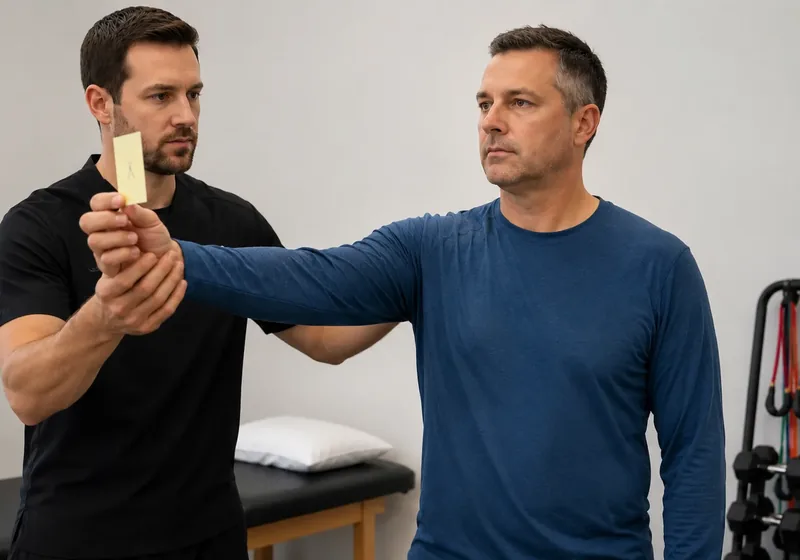 We explain every test before it starts
What It Helps
Dizziness is not something you have to live with. Most of it has a cause you can test for.
What A Session Looks Like
1
We find what sets it off.
2
We treat what the testing shows.
3
You practice it before you leave.
Why It Works
Tested, not guessed at.
Aimed at the cause of the spin.
Balance work built for stairs and curbs.
Retrains the system, not around it.
Pairs Well With
Questions, Answered
Some of it can, briefly, and that is how we learn what is going on. To find the cause we have to reproduce the symptom and watch what your eyes do. We tell you what each test involves before we start it, we stay with you through it, and we stop when you say stop. Your treatment then starts at a level you can handle and builds from there.
No. Illinois has direct access, so no physician referral is needed to start physical therapy. Bring what you already know: any imaging, any medications, anything an ear or neurology visit turned up. If your evaluation points to something that belongs with a physician, we will tell you plainly and help you get there.
Waiting treats every kind of dizziness the same way, and they are not the same. A crystal that has moved in the inner ear, a balance system that needs recalibrating, and dizziness that tracks with your neck all feel alarming, and each one needs different treatment. Testing tells us which one you are dealing with. That is the difference between waiting and a plan with an endpoint. Not sure it is worth a visit? Call us at (708) 657-4038 and ask.
Book Your Visit
Request a time and a real person calls you back. No phone tree. No ‘someone will reach out.’ Just a plan.
5.0 · 120+ Google reviews
Typical response: under 2 business hours
Step 1 of 5
That’s the hard part done. We’ll call during business hours to lock in your time.
Visit Us