
1
We find the joint that stopped gliding.
For the joint that has quietly stopped moving the way it should: trained hands to give the range back, then the work that makes you keep it.
What It Is
Some things do not loosen on their own. A joint that has stopped gliding. A segment of your neck that turns most of the way and then stops. Tissue that healed short after an old injury you barely remember. You can stretch at it for weeks and get nowhere, because the restriction is not where you are pulling.
And a stiff joint never stays a local problem. The segment above it and the one below it start doing its work, and they are the ones that end up sore. So your Doctor of Physical Therapy tests first, then uses skilled hands on the actual restriction: joint mobilization to restore the glide, soft tissue work to release what is guarding, IASTM when the tissue needs firmer and more specific input. Then we test again, so you feel the change and we can measure it.
Here is the part that matters. Hands-on work opens a window. What happens next inside that window is what makes it last: loading, retraining, exercises that teach your body to hold the range it just got back. You are the one who says it is fine and gets on with the day, so we will not hand you back a temporary fix. Manual therapy is a step inside a plan with an endpoint, never the whole plan.
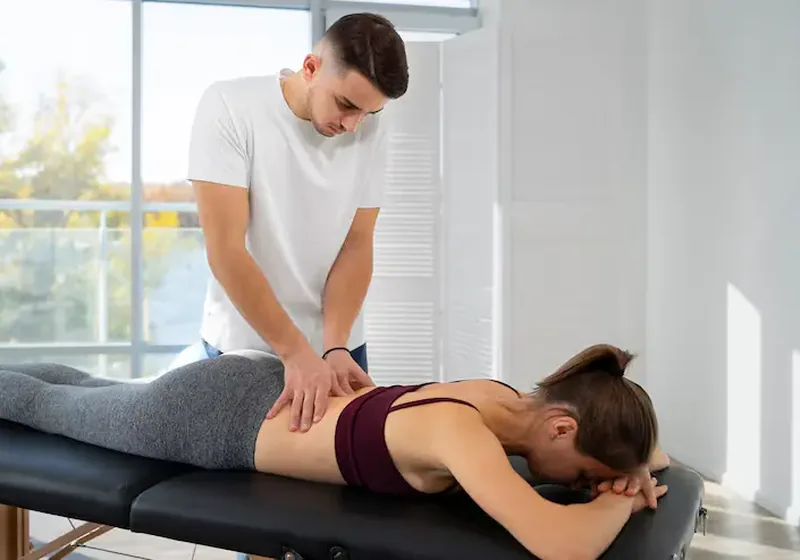 Tested before, tested after
What It Helps
When a joint or a tissue has stopped moving properly, hands get the range back faster than exercise alone.
What A Session Looks Like
1
We find the joint that stopped gliding.
2
Hands-on work opens the range.
3
You load it, so the range stays.
Why It Works
Reaches the stiffness stretching misses.
Skilled hands, tested before and after.
Opens the range your exercises then keep.
A step in the plan, never the whole plan.
Pairs Well With
Questions, Answered
It should feel like firm, purposeful pressure, and sometimes like a good stretch in a spot that has been stuck for a long time. It should not be something you grit your teeth through. Tell us what you are feeling and the pressure changes, because you are in the room with the same Doctor of Physical Therapy for the whole visit, not handed off to someone else halfway through.
That depends on what happens after the hands come off. Hands-on work opens a window of movement. If nothing loads that new range, the body drifts back to what it knows. So every session pairs the hands-on work with loading and retraining, and we retest so you can see what changed. That is the difference between feeling better for an afternoon and keeping it.
Usually, yes. Manual therapy is part of a standard physical therapy visit here, and we are in network with Medicare, Blue Cross Blue Shield, United Healthcare, Tricare, Multiplan and all Workers Compensation. We verify your exact benefits before your first visit, so there is no surprise on your bill. Questions before then? Call us at (708) 657-4038.
Book Your Visit
Request a time and a real person calls you back. No phone tree. No ‘someone will reach out.’ Just a plan.
5.0 · 120+ Google reviews
Typical response: under 2 business hours
Step 1 of 5
That’s the hard part done. We’ll call during business hours to lock in your time.
Visit Us